

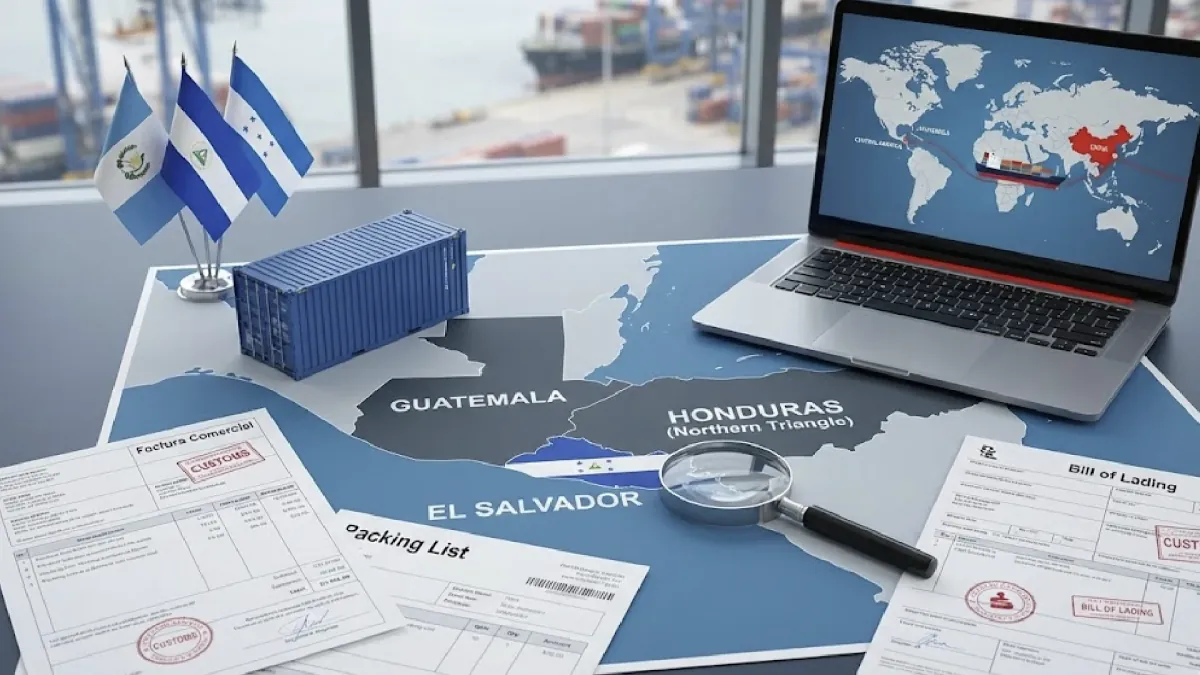
To import to Guatemala, El Salvador or Honduras from China: understand each country's customs differences (SAT, DGA, Aduanas Honduras), prepare accurate documentation, calculate duties (0-15%) + VAT/ISV (12-15%), and plan for 28-43 day transit times.
Importing into Guatemala, El Salvador and Honduras (the CA-3 region) presents unique challenges and opportunities that differ from Mexico, South America or the U.S.
While China remains the most competitive global sourcing hub, importers in these three countries must consider:
- local customs rules,
- required documentation,
- freight routes and transit times,
- taxes and duties,
- volume constraints,
- and the real landed cost per SKU.
This guide explains everything you must understand before placing a purchase order in China.
1. Customs Differences Across Guatemala, El Salvador and Honduras
Though these countries share regional trade similarities, each operates independently with its own customs authority.
Guatemala (SAT – Superintendencia de Administración Tributaria)
Key considerations:
- HS classification accuracy is heavily reviewed
- Environmental and electrical products may require prior permits
- Local port charges at Puerto Quetzal and Santo Tomás can vary widely
More info:
SAT Guatemala
El Salvador (DGA – Dirección General de Aduanas)
Characteristics:
- Fastest clearance among the three countries
- Strong document-matching controls (Invoice, PL, BL)
- Some categories require Ministry of Economy or Ministry of Health approvals
More info:
Aduanas El Salvador
Honduras (Dirección Adjunta de Rentas Aduaneras)
Details:
- Greater scrutiny for declared values
- Importers should understand CIF base for duties
- Possible delays in peak seasons
More info:
Aduanas Honduras
2. Freight Routes From China to the CA-3 Region
Most shipments arrive via the Pacific side, using:
- FCL containers (best cost efficiency)
- LCL for smaller companies
- Transshipment routes through Mexico or Panama
Transit times typically range from 28 to 43 days, depending on port and season.
Air freight is used only for urgent, high-value or low-volume items.
3. Required Documentation (and Why Accuracy Matters)
Your shipment must include:
- Commercial Invoice
- Packing List
- Bill of Lading (BL) or AWB
- Certificate of Origin (when applicable)
- Product-specific certifications (electrical, sanitary, telecom, etc.)
If ANY information is inconsistent across these documents, customs will delay clearance.
4. Duties, Taxes and Local Charges
Although the CA-3 countries are neighbors, their duty rates and VAT differ:
| Country | Import Duty (avg.) | VAT / Sales Tax | Notes |
|---|---|---|---|
| Guatemala | 0–15% | 12% IVA | Strong focus on customs valuation |
| El Salvador | 0–15% | 13% IVA | Efficient clearance when documentation is clean |
| Honduras | 5–15% | 15% ISV | Additional security taxes may apply |
Landed cost varies substantially per category.
5. Product Categories That Require Extra Attention
- Electronics → certifications + labeling
- Kitchen and home appliances → energy and safety requirements
- Children’s products → stricter compliance
- Food contact items → sanitary permits
- Textiles → labeling rules
A sourcing partner can help pre-validate compliance before production.
6. Supplier Selection: What Matters Most for CA-3 Buyers
- Ability to handle FOB shipments
- Clear packaging and labeling requirements
- Willingness to support small/medium MOQs
- Strong post-production QC
- Predictable lead times (important due to longer transit)
7. Landed Cost Planning for Central America
Beyond product price, consider:
- local port fees (CAUCA rules apply but differ in practice),
- import duties and VAT,
- agency fees,
- inland transportation from port to San Salvador / Guatemala City / San Pedro Sula,
- bank transfer fees and currency exchange impacts.
Accurate forecasting prevents margin erosion.
Need help validating suppliers or planning imports to CA-3?
Avoid risks and get better pricing with our sourcing experts.
Frequently Asked Questions
Quick answers to common questions about this topic
Transit times typically range from 28 to 43 days depending on port and season. Most shipments arrive via the Pacific side through transshipment in Mexico or Panama.
Import duties range from 0-15% based on category. VAT is 12% in Guatemala, 13% in El Salvador, and 15% (ISV) in Honduras. Additional security taxes may apply in Honduras.
Required documents include: Commercial Invoice, Packing List, Bill of Lading or AWB, Certificate of Origin (when applicable), and product-specific certifications for electrical, sanitary, or telecom products.