

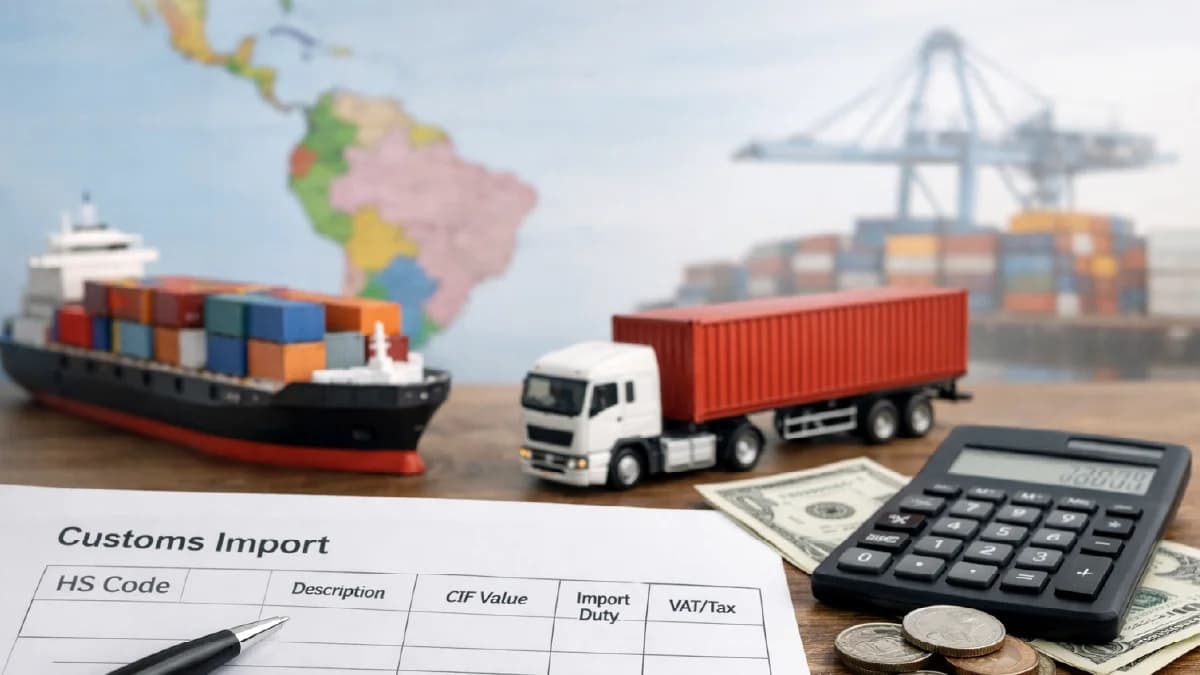
Import tariffs in Latin America vary by country and product and are mainly calculated over CIF value using HS codes. In addition to duties, most countries apply VAT or sales tax at the time of import.
When importing into Latin America, one of the biggest mistakes companies make is assuming that tariffs and taxes work the same way everywhere.
In reality, each country applies its own combination of duties, VAT and regulatory controls.
This guide is designed as a reference resource for importers operating across multiple LATAM markets.
1. What Are Import Tariffs?
Import tariffs are taxes applied to goods when they enter a country.
They serve to:
- generate government revenue,
- protect local industries,
- regulate international trade flows.
In Latin America, tariffs are usually applied over CIF value.
2. The Role of HS Codes
The Harmonized System (HS) classifies products globally using standardized codes.
HS codes determine:
- duty rate,
- regulatory requirements,
- eligibility for trade agreements,
- additional taxes.
Correct classification is critical for cost accuracy.
3. Customs Value: CIF Explained
Most LATAM countries calculate duties over:
CIF = Product value + International freight + Insurance
Taxes and VAT are then calculated on top of that base.
4. Comparative Overview: Tariffs and Taxes by Country
Rates are indicative and vary by HS code.
| Country | Avg. Duty | VAT / Tax | Key Notes |
|---|---|---|---|
| Guatemala | 0–15% | 12% VAT | Strict classification controls |
| El Salvador | 0–15% | 13% VAT | Efficient clearance with clean docs |
| Honduras | 5–15% | 15% ISV | Strong CIF valuation review |
| Costa Rica | 0–15% | 13% VAT | Technical regulations common |
| Panama | 0–15% | 7% ITBMS | Regional logistics hub |
| Colombia | 0–20% | 19% VAT | Multiple regulatory approvals |
| Ecuador | 0–25% | 12% VAT | Safeguards on some goods |
| Peru | 0–11% | 18% VAT | Lower average tariff structure |
5. Additional Costs Beyond Duties
Importers should also consider:
- port handling fees,
- customs brokerage,
- inspections,
- storage if delays occur.
These costs significantly affect landed cost.
6. Trade Agreements and Preferential Treatment
Relevant frameworks include:
- CAFTA-DR
- Andean Community agreements
- Limited bilateral agreements with China
Most imports from China do not receive tariff exemptions.
7. Official Resources for Tariff Consultation
Recommended sources:
- Guatemala: SAT
- El Salvador: Customs Authority
- Honduras: Customs Administration
- Costa Rica: TICA
- Panama: National Customs Authority
- Colombia: DIAN
- Ecuador: SENAE
- Peru: SUNAT
Always verify with official sources.
8. Why This Matters Before You Buy
Understanding tariffs allows importers to:
- price products accurately,
- compare suppliers realistically,
- protect margins,
- avoid compliance surprises.
Knowledge is leverage in international sourcing.
Need help estimating import duties for your market?
Avoid risks and get better pricing with our sourcing experts.
Frequently Asked Questions
Quick answers to common questions about this topic
Most countries calculate duties based on CIF value and apply rates defined by the HS code of the product.
No. Each country defines its own tariff rates, VAT and regulatory requirements even though HS codes are globally standardized.
On each country’s customs authority website or by consulting a customs broker or sourcing partner.