

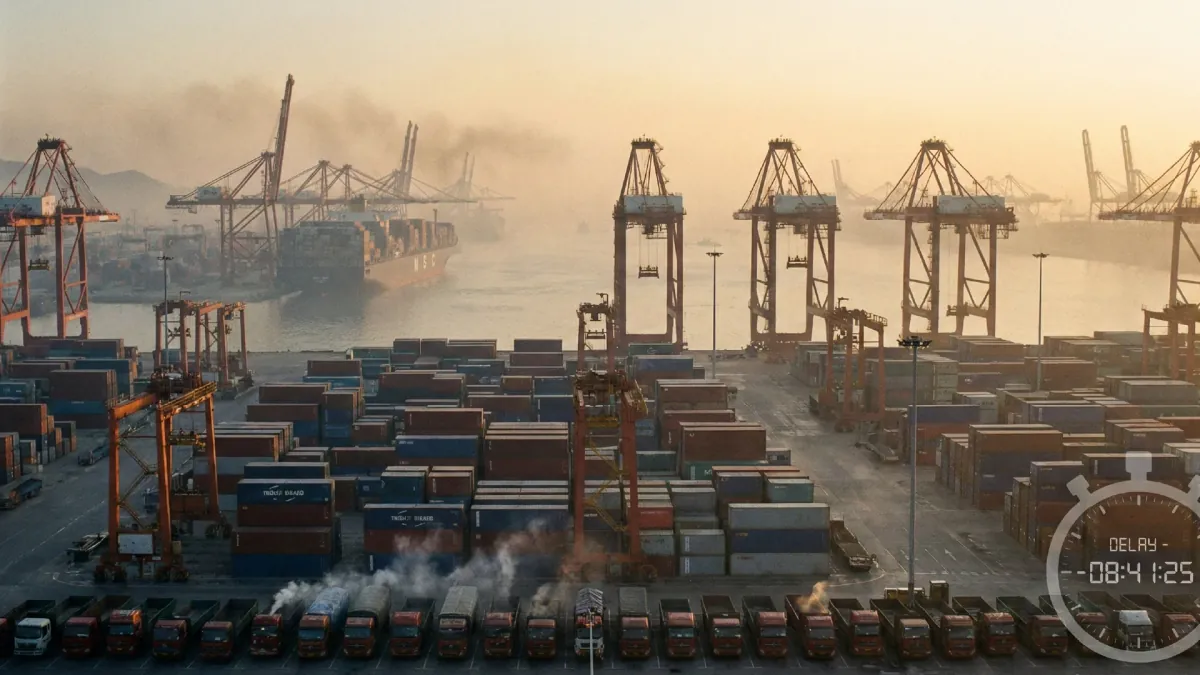
Supply chain delays in China happen due to 5 main causes: shared component suppliers failing, seasonal peaks (Chinese New Year and Golden Week), quality inspections and compliance requirements, logistics bottlenecks at ports, and poor forecasting with last-minute orders.
Delays in Chinese manufacturing rarely come from a single cause. They are the combined result of production dynamics, supplier networks, seasonal peaks, compliance steps and logistics constraints.
For importers in Latin America, North America and Europe, these delays can disrupt product launches, promotions, and inventory planning—especially when factories communicate late or provide unclear timelines.
This article explains what actually happens behind the scenes and how companies can anticipate most delays before they become costly.
1. The Domino Effect of Shared Component Suppliers
Most factories in China do not produce every component themselves. They rely on networks of suppliers for:
- Screws, hinges, motors, electronics
- Packaging materials
- Printed manuals and barcodes
When a component supplier delays, your factory inherits that delay, even if they never mention the dependency.
This is why lead times often jump unexpectedly from “25 days” to “45 days”.
2. Seasonal Peaks: Chinese New Year and Golden Week
China has predictable peaks where production slows dramatically:
Chinese New Year (CNY)
The most disruptive event in Asian manufacturing.
Factories close for 1–3 weeks, but the real impact begins 6 weeks before closure due to:
- Labor shortages
- Workers leaving early
- Overbooked production lines
- Suppliers rushing to complete orders
Golden Week (October)
A full week of nationwide holidays affecting:
- Factory schedules
- Truck capacity
- Port operations
Planning without considering these windows almost guarantees delays.
3. Quality Inspections and Compliance Requirements
Inspections—although essential—can create delays if not scheduled correctly.
Common causes:
- Waiting for inspectors during peak seasons
- Rejected lots needing rework
- Missing certifications (CE, FCC, ISO, CPSIA, etc.)
- Poor packaging quality that requires reprinting
Independent testing labs like
SGS
can also experience backlogs during high-demand months.
4. Logistics Bottlenecks: Ports, Trucks and Space Allocation
Even when production is on time, logistics issues can push your shipment back:
- Port congestion in Shanghai, Ningbo, Shenzhen or Qingdao
- Shortage of empty containers
- Truck capacity limits during seasonal restrictions
- Shipping lines overbooking or eliminating sailings
During global disruptions, vessel delays ripple across all trade lanes.
5. Poor Forecasting and Last-Minute Orders
One of the most common internal causes of delay is simply late planning.
Factories prioritize:
- Long-term clients
- High-volume clients
- Well-structured purchase orders
Small orders with vague specifications or rushed changes usually fall to the back of the queue.
How to Reduce Delay Risk in Your Supply Chain
Several strategies help keep your timeline under control:
- Share forecast windows with suppliers early
- Finalize specifications before production
- Build buffer stock for high-rotation items
- Schedule inspections proactively
- Avoid ordering during China’s peak months
- Work with a sourcing partner who monitors production in person
The key is prevention, not reaction.

Need help reducing delays in your supply chain?
Avoid risks and get better pricing with our sourcing experts.
Frequently Asked Questions
Quick answers to common questions about this topic
The 5 main causes are: shared component supplier failures, seasonal peaks (Chinese New Year, Golden Week), quality inspection requirements, logistics bottlenecks at ports, and poor forecasting with last-minute orders.
Share forecasts with suppliers early, finalize specifications before production, build buffer stock, schedule inspections proactively, avoid ordering during China's peak months, and work with a sourcing partner.
Factories rely on networks of component suppliers. When a component supplier delays, your factory inherits that delay—even if they don't mention the dependency.