

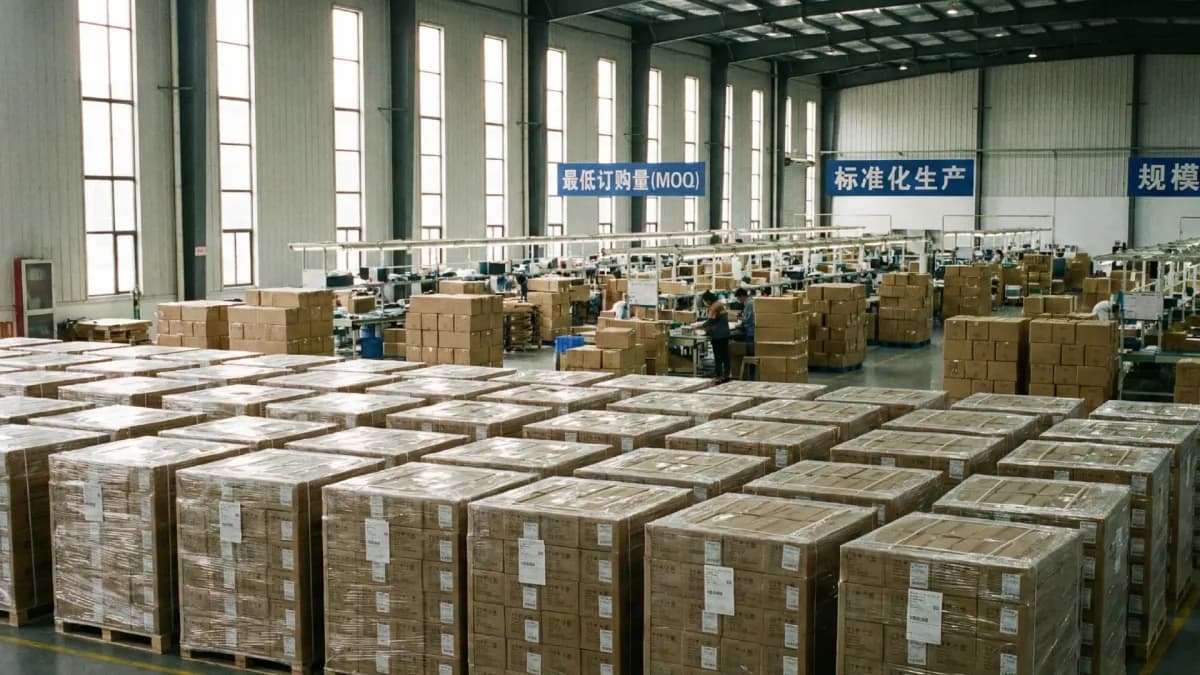
Factories require MOQ because production lines need configuration, packaging has minimum print runs, and setup costs must be distributed. To negotiate MOQ: combine models, negotiate by variant, or offer long-term purchase commitments.
If you have ever contacted a factory in China, chances are the first message you received included a number: the MOQ.
Minimum Order Quantity can feel like an obstacle for new importers—but in reality, it is one of the most logical and predictable parts of manufacturing.
Understanding MOQ allows you to negotiate better, plan costs more realistically, and avoid problems that many first-time buyers face.
Why Do Factories Need MOQ?
Factories operate on efficiency, and efficiency requires scale. MOQ exists because:
- Production lines must be configured specifically for each product
- Packaging materials (master boxes, color boxes, labels) usually require minimum print runs
- Component suppliers also impose their own MOQ on the factory
- Labor setup costs are significant and must be distributed across enough units
Without MOQ, manufacturing would be economically unsustainable.
The Real Cost Behind “Small Orders”
Many importers expect factories to accept small quantities, especially during the first purchase. However, small orders often result in:
- Higher unit cost due to lower economies of scale
- Delays because factories prioritize larger-volume clients
- Reduced ability to customize or improve product features
In many cases, accepting extremely low MOQ can be a warning sign that the supplier is not a real factory but a trader without production control.
How MOQ Affects Your Pricing Strategy
MOQ shapes the cost structure of your business. When you increase order quantity:
- Unit cost decreases
- Contribution margin improves
- You unlock customization options (color, finish, packaging)
- You reduce freight cost per unit in FCL (full container load) scenarios
MOQ is not only a factory requirement—it is a strategic tool for your profitability.
How to Negotiate MOQ Without Undermining the Relationship
Do not ask factories to “break the rules”. Instead:
- Request a mixed order combining several models to reach MOQ
- Ask for MOQ by color or by packaging variant
- Offer longer-term purchase commitments
- Start with the standard MOQ but negotiate better terms for future orders
Factories respond well to clarity, predictability and professional communication.
When Should You Walk Away?
If the MOQ is completely unrealistic for your market, reconsider:
- Expected rotation
- Storage capacity
- Working capital
- Product life cycle
Sometimes choosing a different supplier—or even a different product—is the smartest move.

Need help defining MOQ or planning volume for your next import?
Avoid risks and get better pricing with our sourcing experts.
Frequently Asked Questions
Quick answers to common questions about this topic
Factories need MOQ because production lines require configuration, packaging has minimum print runs, component suppliers impose their own MOQs, and labor setup costs must be distributed across enough units.
Small orders typically result in higher unit costs, delays because factories prioritize larger clients, and reduced ability to customize. Extremely low MOQ can also signal a trader—not a real factory.
Request mixed orders combining several models, negotiate MOQ by color or variant, offer longer-term purchase commitments, or start with standard MOQ and negotiate better terms for future orders.