

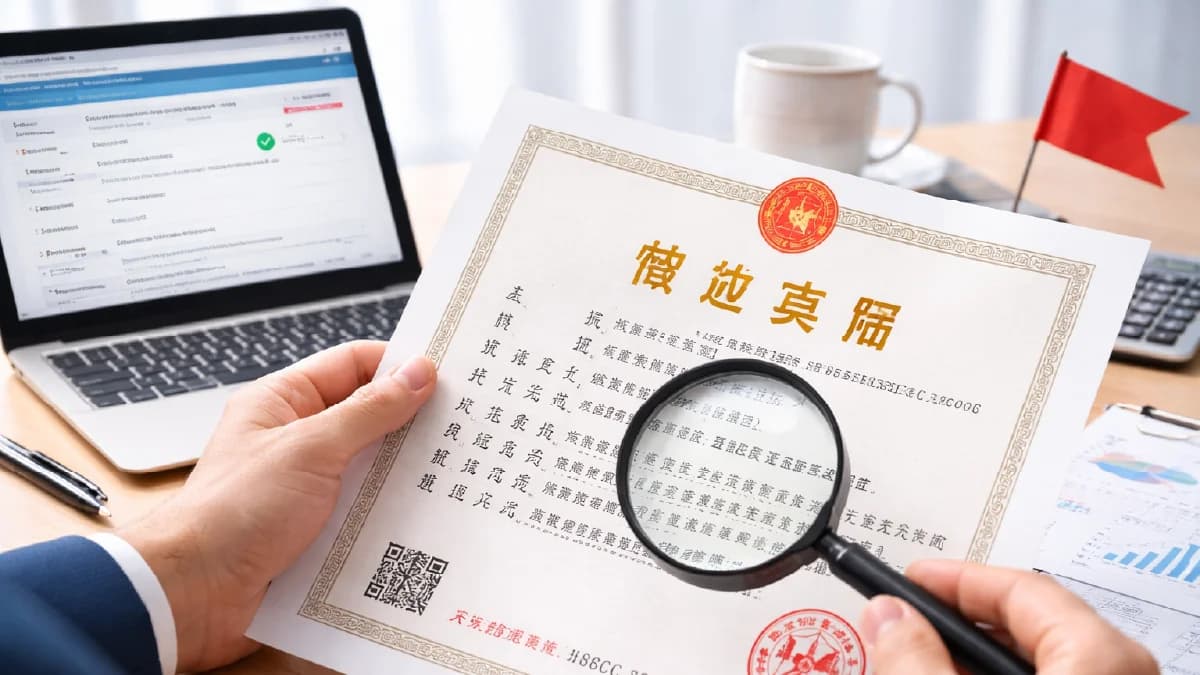
To verify a Chinese business license (营业执照): request a clear color copy, capture the legal Chinese name and the 18-character Unified Social Credit Code (USCC), ensure the bank beneficiary matches the legal name, and confirm company status and details via the GSXT/NECIPS public registry. Review entity type, business scope, address, and inconsistencies before paying.
Most importers don’t lose money because they picked the wrong product.
They lose money because they trusted the wrong identity.
If you want a serious first-layer verification in China, one document should come early—before deposits, before contracts, before “urgent payment” messages:
the Chinese business license (营业执照).
This guide is written for importers in Central America and LATAM who need a practical way to read, interpret, and validate supplier identity.
1) What a Chinese Business License (营业执照) really is
A business license is a government-issued registration document that typically shows:
- the company’s legal identity (name + ID code)
- entity type and registered address
- legal representative
- business scope (what the company is registered to do)
- basic registration status information (via public records)
It doesn’t guarantee the supplier is “good”—but it helps you catch inconsistencies that are common in fraud and high-risk setups.
2) The key fields (what they mean for buyers)
Here’s a buyer-focused reading map.
| Chinese field | Meaning | Why you care |
|---|---|---|
| 统一社会信用代码 (USCC) | 18-character unique company ID | Best way to search official registries accurately |
| 名称 | Legal company name (usually in Chinese) | Must match contracts and bank beneficiary |
| 类型 | Entity type | Helps you understand structure (factory/trader/WFOE, etc.) |
| 法定代表人 | Legal representative | Useful for contract consistency and due diligence |
| 注册资本 | Registered capital | Not cash-on-hand, but indicates structure/scale signals |
| 成立日期 | Establishment date | Helps assess how new the entity is |
| 住所 / 地址 | Registered address | Coherence check with operations and region |
| 经营范围 | Business scope | Should be broadly consistent with what they sell |
| 登记机关 | Registration authority | Shows jurisdiction (city/province) |
Practical rule: If the supplier refuses to provide a clear license copy or won’t share the legal Chinese name, treat it as a risk escalation.
3) Common red flags before you pay
Most serious issues appear as mismatches, not as one isolated clue.
Pause and verify if you see:
- Bank beneficiary name doesn’t match the license legal name
- Supplier asks you to pay a “different company” without strong documentation
- Business scope looks unrelated to the product category
- Registry status shows revoked/cancelled
- Supplier resists second-channel confirmation when bank details change
Verification is not mistrust—it’s basic trade hygiene.
4) How to verify through GSXT / NECIPS (step by step)
The most referenced public registry is GSXT, often called NECIPS (National Enterprise Credit Information Publicity System).
Access (may require CAPTCHA):
GSXT / NECIPS (China Company Registry)
Practical workflow
-
Ask your supplier for:
- a clear color scan of the license
- the legal Chinese name (copyable text)
- the USCC (18 characters)
-
Search using the USCC (preferred)
- It reduces confusion with similar names.
-
Validate:
- exact legal name match
- active vs revoked/cancelled status
- address + registration authority
- entity type
- business scope consistency
-
Save evidence:
- screenshot/PDF for your internal KYC file.
5) Connect the license to payments (where most losses happen)
A “real” license doesn’t protect you if you pay the wrong beneficiary.
Before wiring:
- ensure the bank beneficiary matches the legal name
- treat mismatches as high risk until fully explained
- confirm any bank changes via a second channel (call/video)
This prevents the most common fraud pattern: “bank detail change” through impersonation.
6) Entity types in China (what it means for importers)
Most sourcing scenarios fall into:
- Manufacturers: stronger production control, usually better unit economics
- Trading companies: speed + broader catalogs, but require tighter traceability controls
- WFOEs / foreign-invested entities: different structure, often more formal processes
The point is not to “avoid traders,” but to understand the role and manage risks through audits, inspections, and structured contracts.
Final takeaway: trust with a method
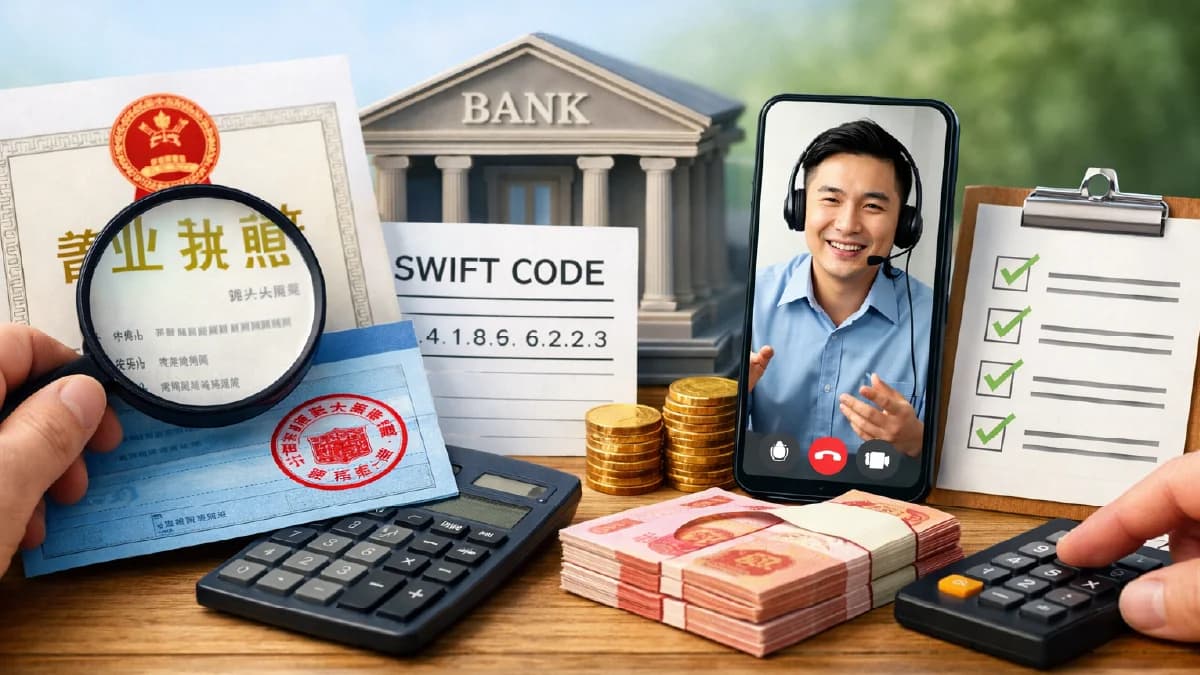
A Chinese business license becomes powerful when you use it inside a standard checklist:
- clear stamped license copy
- legal Chinese name + USCC
- registry validation
- consistency across contracts + bank beneficiary
- second-channel confirmation for sensitive changes
That’s how professional import operations reduce risk—without slowing down growth.
Need help verifying suppliers before you pay?
Avoid risks and get better pricing with our sourcing experts.
Frequently Asked Questions
Quick answers to common questions about this topic
It proves a company is legally registered in China. It helps you confirm identity, status, entity type, and business scope before you pay or sign contracts.
The legal Chinese name and the 18-character Unified Social Credit Code (USCC). The USCC is the company’s official ID used for registry searches.
Common warning signs include name mismatches with bank accounts or contracts, revoked/cancelled status, business scope inconsistent with what they sell, missing stamps, or last-minute identity changes.