

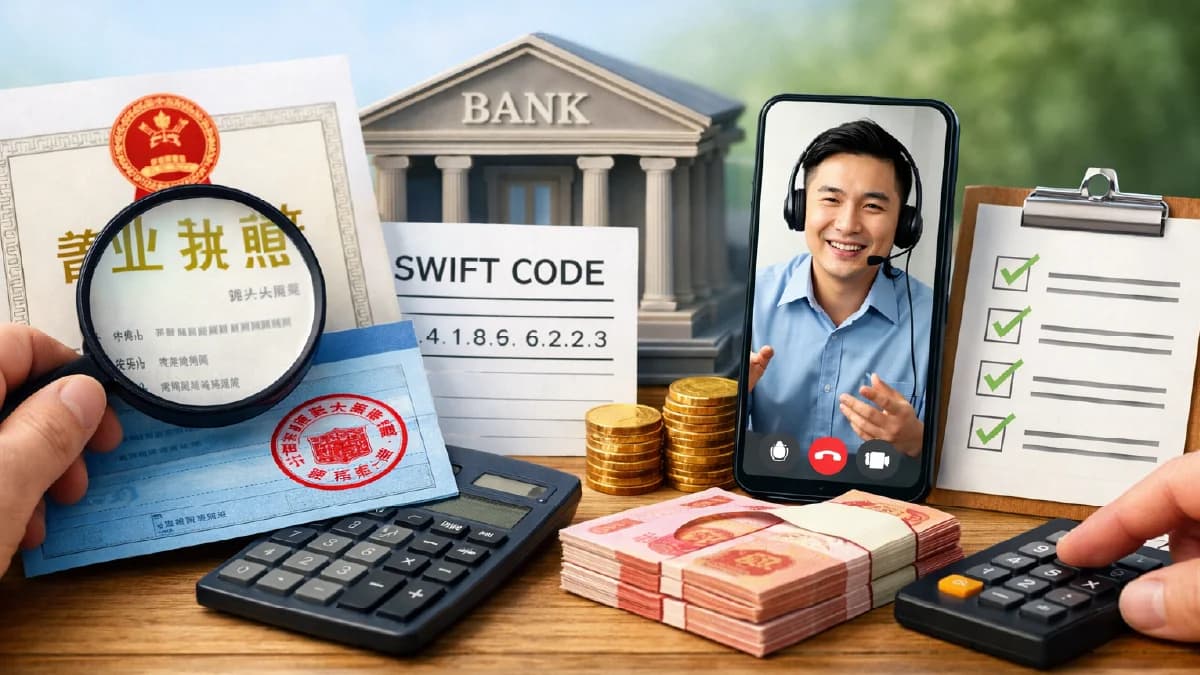
To verify a Chinese supplier’s bank account: ensure the beneficiary matches the company’s legal name on its business license, request bank details on letterhead with stamp, validate the SWIFT/BIC and bank address, confirm any changes via a second channel (call/video), and use staged payments with inspection before final balance.
Most importers don’t lose money because they chose the wrong product.
They lose money because they paid to the wrong bank account.
A classic scenario: you negotiate, approve samples, receive the proforma… and right before you pay, you get an email:
“Our bank details changed. Please use this new account.”
That’s one of the most common international trade fraud patterns: communication compromise + beneficiary change.
This guide gives you a repeatable method to verify bank accounts before wiring.
1) Know the risk: fraud doesn’t always come from the supplier
Many times the supplier is legitimate, but someone:
- compromises email,
- intercepts threads,
- or sends fake bank instructions.
That’s why bank verification is not “distrust”—it’s operational hygiene.
2) Step 1: request bank details on letterhead (with company stamp)
Ask for an official document including:
- Legal company name (beneficiary)
- Account number
- Bank name
- Bank address
- SWIFT/BIC
- Official stamp + signature
Rule: never wire based only on text in an email or chat.
3) Step 2: match beneficiary name with the business license
Request the supplier’s business license.
The wire beneficiary should match the registered legal name.
If the supplier asks you to:
- pay another company,
- pay a “partner”,
- pay a personal account,
…treat it as high risk unless fully justified and validated.
4) Step 3: validate SWIFT/BIC and bank consistency
Check that the SWIFT/BIC:
- is valid,
- matches the bank provided,
- and is consistent with the supplier’s location.
You can use SWIFT’s official directory as a reference:
SWIFT BIC Search
(This validates the bank/BIC, not ownership of the account.)
5) Step 4: confirm via a second channel (anti-impersonation)
For meaningful payments or first orders, confirm bank details via:
- a video call showing the stamped document,
- a phone call to the supplier’s official number,
- or confirmation through a verified portal/platform.
Key rule: don’t confirm using the same channel that could be compromised.
6) Step 5: use staged payments to limit exposure
Standard structure for new relationships:
- 30% deposit
- 70% after pre-shipment inspection
If a new supplier insists on 100% upfront without safeguards, treat it as a risk escalation.
7) Step 6: red flags that justify pausing the payment
Stop and re-verify if you see:
- last-minute bank changes,
- beneficiary name mismatch,
- urgency pressure,
- personal account requests,
- missing stamp or inconsistent documents.
A legitimate supplier won’t be threatened by basic controls.
8) If you already paid and suspect fraud
Act immediately:
- Contact your bank and request a recall/hold if possible.
- Gather evidence (emails, PDFs, SWIFT, chats).
- Notify the supplier (if compromise is suspected).
- Consider reporting to relevant authorities in your jurisdiction.
Time matters: the first hours are critical.
Conclusion: verification is discipline, not paranoia
Wiring payments abroad is normal in sourcing.
The difference between safe trade and a costly loss often comes down to one habit: verify before you wire.
Use this standard:
- Correct beneficiary
- Stamped letterhead
- Second-channel confirmation
- Staged payments + inspection
Want a safer payment workflow for your next import?
Avoid risks and get better pricing with our sourcing experts.
Frequently Asked Questions
Quick answers to common questions about this topic
Many cases involve email compromise or fake bank change requests. If you wire to the wrong beneficiary, recovering funds can be difficult.
It’s not recommended. In B2B trade, paying a registered company account is safer. Personal accounts are a major risk signal.
Pause the payment, request stamped letterhead confirmation, and verify through a second channel (call/video). Consider third-party validation before wiring.