

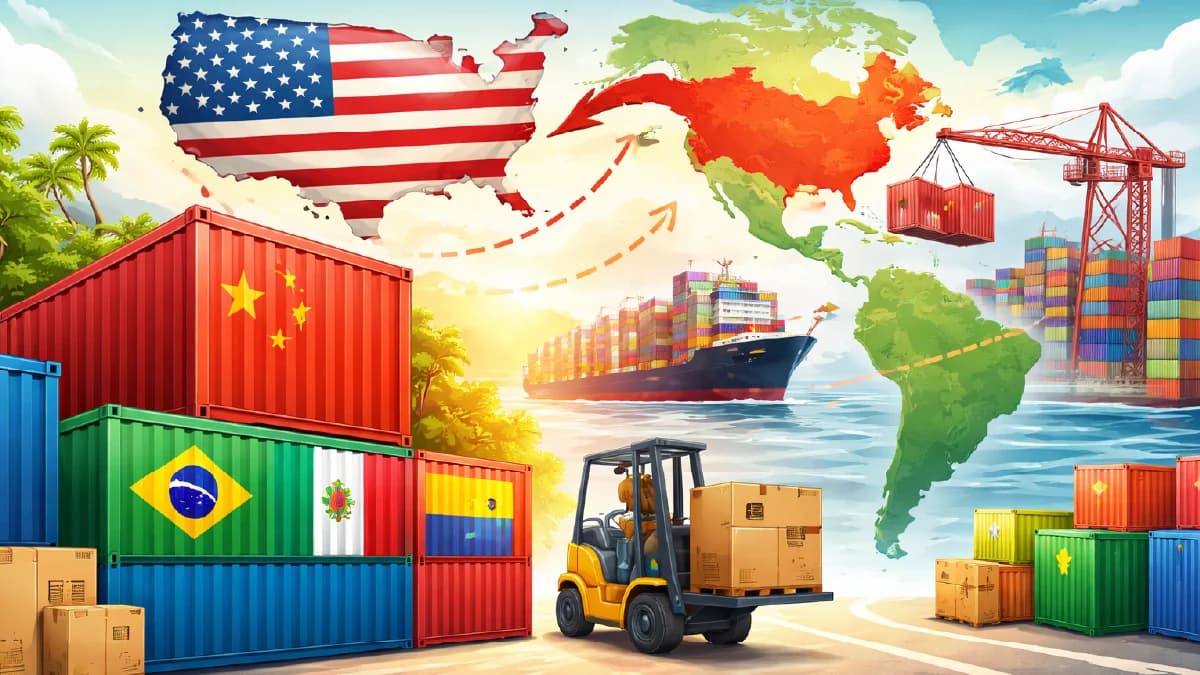
U.S. tariffs on Chinese goods are reshaping global supply chains. For Latin American importers, this creates both risk—greater scrutiny and competition—and opportunity through nearshoring, China+1 strategies, and smarter sourcing diversification.
For decades, the trade relationship between the United States and China anchored global manufacturing. That balance changed when Washington imposed punitive tariffs on Chinese goods, triggering what is now widely known as the U.S.–China trade war.
While these measures target U.S. domestic policy goals, their ripple effects extend far beyond U.S. borders—directly influencing sourcing decisions across Latin America.
1) A short overview of the U.S.–China trade war
Beginning in 2018, the U.S. imposed additional tariffs on hundreds of billions of dollars’ worth of Chinese imports, with some categories reaching 25–30% or more. The intent was to reduce dependency and pressure structural changes.
China responded in kind, accelerating a global supply chain realignment.
Official updates and policy context can be found via the:
Office of the U.S. Trade Representative
2) How tariffs reshape global supply chains
Higher tariffs push companies to rethink sourcing:
- Shifting production to alternative countries.
- Adopting China+1 manufacturing strategies.
- Rebalancing margins across different markets.
These shifts affect Latin American importers even when their final destination is not the U.S., through price pressure, capacity changes, and supplier behavior.
3) Opportunities for Latin America
Nearshoring momentum
Mexico and parts of Central America are increasingly attractive for U.S.-focused manufacturing due to proximity and trade agreements.
Strategic diversification
Latin American importers can leverage China’s scale while adding alternative sources to reduce exposure.
Negotiation leverage
Some Chinese factories, impacted by reduced U.S. demand, are more flexible on pricing and MOQs for new markets.
4) The risk of being seen as a “backdoor”
U.S. authorities have increased enforcement around rules of origin, particularly where Chinese goods are suspected of being rerouted through third countries.
This raises compliance stakes for LATAM companies exporting to the U.S. or participating in cross-border supply chains.
5) Strategic responses for LATAM importers
Smart importers are moving beyond reactive decisions:
- Diversifying sourcing without abandoning China.
- Investing in origin compliance and documentation.
- Evaluating tariff exposure across the entire supply chain.
- Partnering with advisors who understand geopolitics—not just FOB pricing.
Conclusion: Trade is now geopolitical strategy
The U.S.–China trade war highlights a new reality: international trade is no longer just about cost efficiency.
For Latin American importers, understanding geopolitics is now a competitive advantage. Those who adapt early will protect margins, reduce risk, and position themselves ahead of less-informed competitors.
Need guidance adapting your sourcing strategy to global trade tensions?
Avoid risks and get better pricing with our sourcing experts.
Frequently Asked Questions
Quick answers to common questions about this topic
Because they reshape global sourcing and production flows. When U.S. tariffs increase costs on Chinese goods, companies adjust strategies worldwide, impacting prices and availability in LATAM.
Partially. Nearshoring and diversification create opportunities, but increased regulatory scrutiny and competitive pressure also introduce new risks.
They should diversify suppliers, understand rules of origin, strengthen compliance, and adopt sourcing strategies aligned with geopolitical realities.