

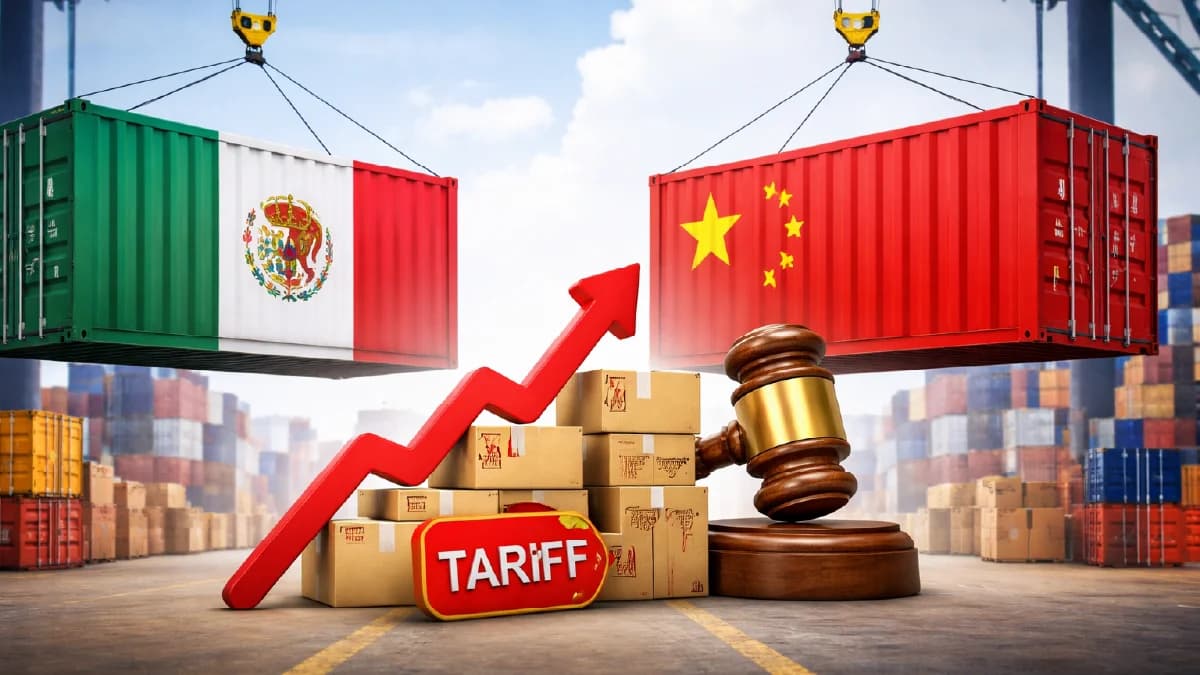
As of January 1, 2026, Mexico imposed tariffs of 5% to 50% on 1,463 product categories from countries without free trade agreements, primarily targeting China. This affects automotive, textiles, electronics, and plastics sectors. Latin American importers using Mexico as a gateway or competing with Mexican products need to reassess their strategies.
On January 1, 2026, Mexico activated the most significant shift in its trade policy in decades. New tariffs ranging from 5% to 50% now apply to imports from countries without free trade agreements—with China as the primary target.
For Latin American importers, this isn't just Mexican news. Whether you compete with Mexican products, use Mexico as a logistics hub, or source from suppliers with Mexican operations, these changes ripple across the region.
This article breaks down what happened, which products are affected, and what it means for importers throughout Latin America.
What Exactly Changed
On December 29, 2025, Mexico published a decree modifying 1,463 tariff lines under the Law of General Import and Export Taxes (LIGIE). The new rates took effect January 1, 2026.
The tariffs apply specifically to goods from countries without a free trade agreement with Mexico. This includes China, India, South Korea, Brazil, and Russia—but China is by far the largest affected trading partner.
In 2024, Mexico imported $130 billion worth of goods from China, making it Mexico's second-largest import source after the United States.
Which Products Are Affected
The decree covers 17 major sectors. Here are the key categories and their new tariff rates:
| Sector | New Tariff Rate |
|---|---|
| Automobiles (passenger and cargo) | 50% |
| Auto parts and components | 25-50% |
| Textiles and fabrics | 25-35% |
| Footwear and leather goods | 25% |
| Steel and aluminum | 25% |
| Plastics | 15-25% |
| Electronics and appliances | 15-25% |
| Furniture | 15-25% |
| Toys | 25% |
| Glass | 15% |
| Paper and cardboard | 15% |
| Cosmetics and perfumes | 25% |
| Motorcycles | 25% |
Of the 1,463 modified tariff lines, 316 previously had zero import duty. These products now face taxes they've never had before.
The Real Reasons Behind the Tariffs
The Mexican government presented this as a measure to protect domestic industry, substitute imports, and support the "Plan México" industrial strategy. The stated goals include safeguarding 350,000 jobs and generating $70 billion pesos in additional revenue.
However, the timing tells a different story.
These tariffs arrived just as Mexico faces pressure from the Trump administration, which has accused Mexico of being a "back door" for Chinese goods entering the US market. The USMCA (T-MEC) review is approaching, and Mexico is working to demonstrate alignment with US trade priorities.
China's Ministry of Commerce criticized the move, warning Mexico to "think twice" and accusing it of acting under external coercion to restrict trade with China.
Impact on Mexican Businesses
For companies operating in Mexico, the immediate effects are significant.
Higher input costs. Manufacturers relying on Chinese components now face 15-50% higher costs on those inputs. This affects everything from auto assembly to electronics manufacturing.
Margin pressure. Retailers and distributors must choose between absorbing costs or passing them to consumers. Many will do both—reducing margins while raising prices.
Supply chain restructuring. Companies are evaluating whether to shift sourcing to domestic suppliers, USMCA-compliant sources, or other Asian countries not subject to the tariffs.
Some businesses anticipated the change and accelerated purchases in late 2025. Others are now scrambling to adjust.
What This Means for Central American Importers
If you import to Guatemala, El Salvador, Honduras, or other Central American countries, Mexico's tariffs create both challenges and opportunities.
Potential opportunities:
Competitive advantage. If you import directly from China to Central America, your landed costs remain unchanged while Mexican competitors face 15-50% higher costs on the same products.
Market shifts. Mexican products containing Chinese components may become less competitive. Central American businesses could gain market share in categories where Mexican products previously dominated.
Alternative sourcing. Suppliers looking to avoid Mexican tariffs may route more directly to Central American ports, potentially improving logistics options.
Potential challenges:
Supply chain disruption. If you source from Mexican distributors who rely on Chinese inputs, expect price increases or supply constraints.
Transit routing. Some importers use Mexican ports as a transit point for goods headed to Central America. This may become less attractive if goods face tariff exposure in Mexico.
Regional pricing effects. Higher prices in Mexico could drive demand for Central American alternatives, but could also create inflationary pressure across the region.
The Bigger Picture: US-China Trade War Spillover
Mexico's tariffs don't exist in isolation. They're part of a broader realignment as the US pressures its trading partners to reduce dependence on China.
The US currently maintains tariffs of approximately 30% on Chinese goods (reduced from a peak of 145% after the May 2025 trade truce). The Trump administration has made clear it expects North American partners to follow suit.
For Latin American businesses, this creates a complex landscape:
Nearshoring momentum. Companies are actively moving production from China to Mexico and other Latin American locations. Mexico's tariffs could accelerate or complicate this trend.
"China+1" strategies. Businesses are diversifying supply chains to reduce China exposure. Vietnam, India, and Indonesia are common alternatives.
Direct-to-LATAM routing. As Mexican tariffs increase, shipping directly from China to Central and South American ports becomes relatively more attractive.
Strategies for Importers
Given this new reality, here are practical considerations:
1. Audit your supply chain
Identify which of your products or components come from China through Mexico. Calculate the tariff impact and evaluate alternatives.
2. Consider direct importing
If you've been using Mexican distributors for Chinese products, compare the total cost of importing directly from China to your country. The math may have changed significantly.
3. Explore alternative origins
For some products, Vietnam, India, or other manufacturing hubs may now be cost-competitive with China when serving the Mexican market. Evaluate whether these alternatives work for your needs.
4. Monitor for exemptions
The decree allows the Secretary of Economy to establish special mechanisms for essential inputs. Some categories may receive exemptions or reduced rates. Stay informed about developments.
5. Plan for volatility
Trade policy is unpredictable. The USMCA review, US-China negotiations, and Mexican domestic politics could all trigger further changes. Build flexibility into your sourcing strategy.
What Happens Next
Mexico's tariffs are designed as a protectionist measure, but their effectiveness depends on enforcement and business adaptation. Several scenarios could unfold:
Domestic substitution. Mexican manufacturers could capture share from imports, supporting the government's industrial goals.
Price inflation. Higher import costs could feed into consumer prices, creating political pressure to modify the policy.
Trade diversion. Goods could flow through alternative channels or countries to avoid tariffs, undermining the policy's intent.
Escalation or negotiation. China could retaliate with its own measures, or the two countries could negotiate adjustments.
For now, importers should plan based on current rates while staying alert for policy changes.
Final Thoughts
Mexico's new tariffs on Chinese goods represent a fundamental shift in regional trade dynamics. Whether you see this as opportunity or obstacle depends on your specific situation—your products, your supply chain, and your competitive position.
The importers who thrive will be those who adapt quickly: reassessing costs, exploring alternatives, and making decisions based on the new reality rather than hoping for a return to the old one.
Need help navigating the new tariff landscape?
Avoid risks and get better pricing with our sourcing experts.
Frequently Asked Questions
Quick answers to common questions about this topic
Mexico imposed tariffs ranging from 5% to 50% on 1,463 product categories from countries without free trade agreements. The highest tariffs (50%) apply to automobiles and auto parts. Textiles, footwear, plastics, and electronics face tariffs of 25-35%.
The official reason is to protect domestic industry and reduce trade imbalances. However, the move is widely seen as alignment with US trade policy ahead of the USMCA review, as the Trump administration pressured Mexico to reduce Chinese goods entering North America.
Central American importers may see opportunities as Mexican competitors face higher costs. However, those using Mexico as a transit point or sourcing Mexican products with Chinese components may face disruption. Direct imports from China to Central America remain unaffected.