

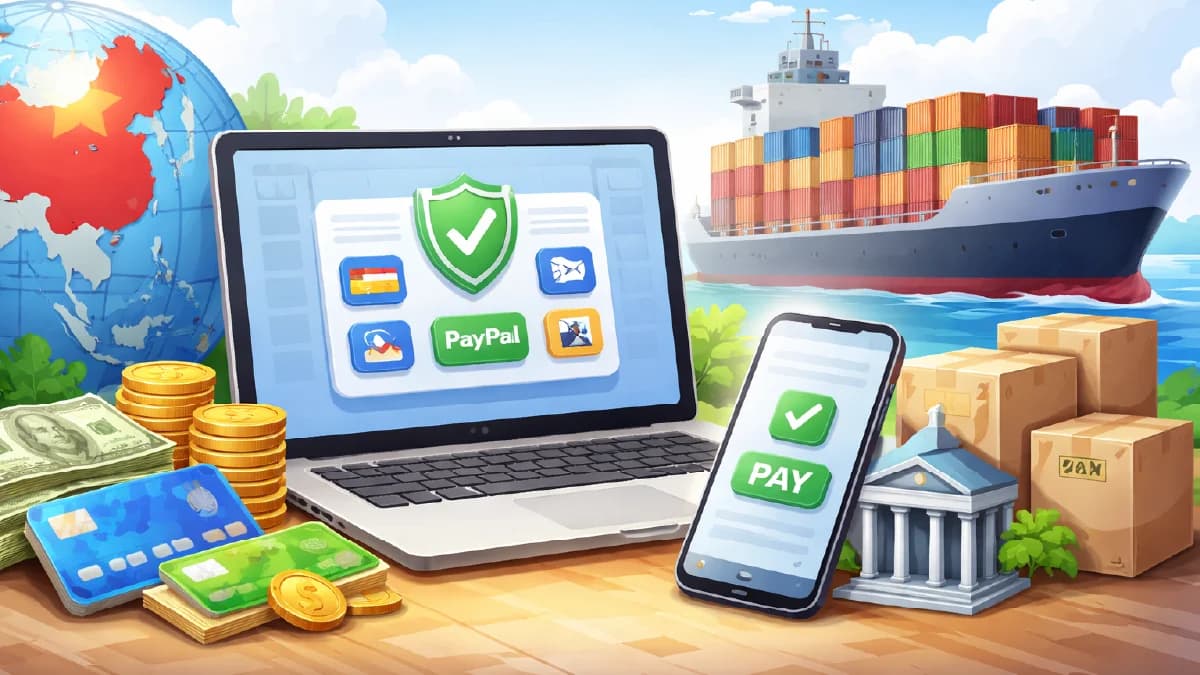
Common payment methods when buying from China include bank transfer (T/T), letters of credit (L/C), PayPal, and platforms like Alibaba Trade Assurance. The best option depends on order value, supplier relationship, and acceptable risk level.
One of the biggest psychological barriers to importing from China is not sourcing—it’s payment.
Questions like “What if I pay and they disappear?” are common.
The truth is that most payment problems come from using the wrong method at the wrong time, not from China itself.
This guide explains your options, when to use each one, and how to protect your company.
1) Bank transfer (T/T): the global standard
T/T (Telegraphic Transfer) is the most common payment method in international trade.
How it works
- You send a SWIFT transfer to the supplier’s bank account.
- Payments are usually staged.
Pros
- Widely accepted by factories.
- Lower fees than digital wallets.
- Suitable for medium and large orders.
Risks
- Hard to reverse if fraud occurs.
- Requires careful bank verification.
👉 Best practices
- Pay only to company accounts, never personal ones.
- Match bank account name with business license.
- Confirm bank changes through multiple channels.
2) Typical payment structure: 30% / 70%
The most common structure is:
- 30% deposit to start production.
- 70% balance after inspection and before shipment.
This:
- Limits upfront exposure.
- Preserves leverage before shipping.
- Aligns incentives with performance.
3) Letter of Credit (L/C): high security, high complexity
A Letter of Credit is a bank-backed payment instrument released only when conditions are met.
Pros
- Strong protection for both parties.
- Suitable for large contracts.
Cons
- Expensive.
- Document-heavy.
- Often impractical for mid-sized LATAM companies.
4) PayPal and electronic payments
When they make sense
- Samples.
- Small trial orders.
- Initial supplier testing.
Limitations
- High fees.
- Limited supplier acceptance.
- Weak coverage for complex B2B transactions.
PayPal is a temporary tool, not a long-term import payment strategy.
5) Alibaba Trade Assurance
For purchases made through Alibaba, Trade Assurance provides conditional protection.
Advantages
- Some dispute coverage.
- Helpful for first-time buyers.
Limitations
- Protection depends on strict compliance.
- Does not replace inspections or due diligence.
6) Payment methods to avoid
Clear red flags:
- Western Union / MoneyGram for commercial payments.
- Requests to pay personal accounts.
- Urgent payment pressure without contracts.
- Last-minute bank changes without documentation.
7) Choosing the right method for your situation
- New importer / small order: Trade Assurance or PayPal.
- Mid-size order / verified supplier: T/T with staged payments.
- Large contracts: Consider L/C.
- Established relationship: Negotiated terms or trade credit.
There is no “perfect” method—only the right method for your stage.
Conclusion: Smart payments protect smart importers
Payment is not an administrative step—it’s a risk management tool.
Importers who structure payments correctly:
- reduce losses,
- negotiate better,
- and build stronger supplier relationships.
Importing from China is safe when done with discipline and structure.
Need help structuring safe payments with Chinese suppliers?
Avoid risks and get better pricing with our sourcing experts.
Frequently Asked Questions
Quick answers to common questions about this topic
International bank transfer (T/T) is the most widely used method for B2B imports from China, usually combined with staged payments.
Not fully. Most importers avoid 100% upfront payments and instead use staged structures like 30% deposit and 70% after inspection.
For small orders or first-time purchases, platforms with some protection such as Alibaba Trade Assurance or PayPal can reduce initial risk.