

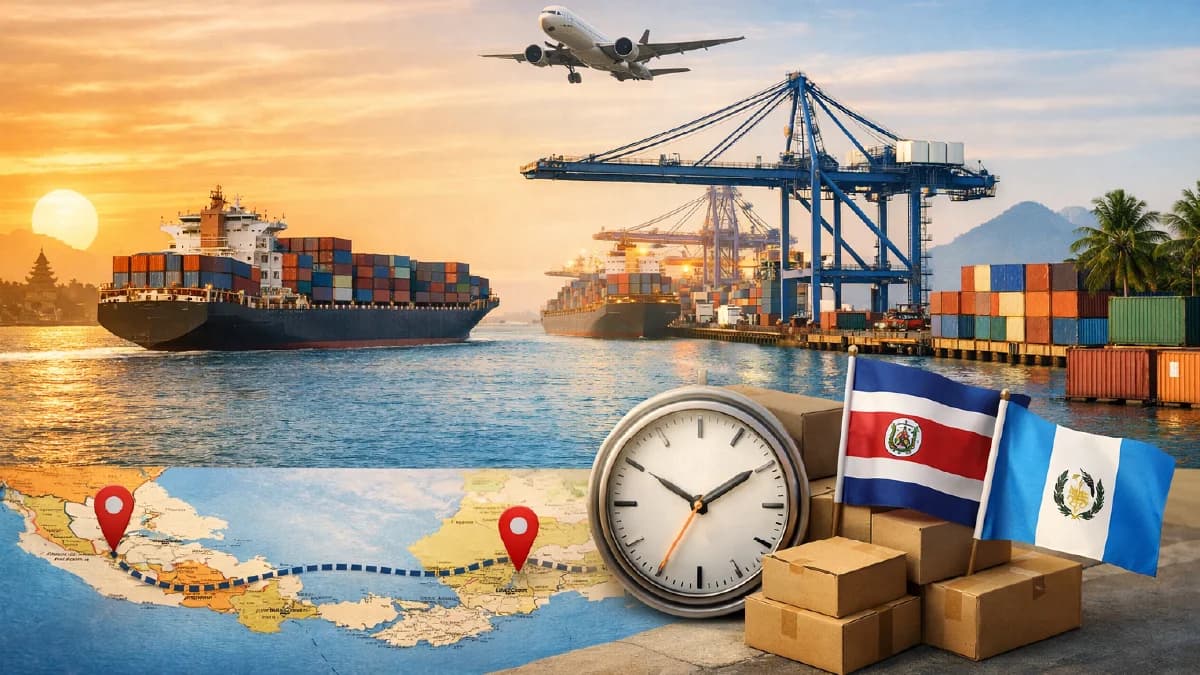
Typical ocean transit from China to Central America often ranges from ~25–40 days port-to-port, but real lead time is usually longer once you include production, consolidation (LCL), transshipments, customs, and inland trucking. Planning around peak seasons and Chinese New Year is essential to avoid stockouts and cost surprises.
When importers ask “How long will it take from China to Central America?”, they usually mean one number.
In reality, shipping time is a range—and the difference between a smooth 30-day arrival and a painful 55-day delay often comes down to planning discipline, not luck.
This guide is designed for importers in Guatemala, El Salvador, Honduras, and Costa Rica, and it works whether you ship LCL or FCL, buy finished goods, or run private label programs.
1) The two timelines you must separate
Most confusion happens because people mix these two concepts:
A) Port-to-port (ocean transit only)
This is the sailing time between a port in China and a port in Central America.
B) Real lead time (what your business experiences)
This includes:
- Production time (and supplier backlog)
- Export handling in China (pickup, export customs, documentation)
- Ocean transit
- Port handling at destination
- Customs clearance
- Inland trucking to your warehouse (and sometimes border crossings)
Bottom line: even if the vessel transit is “30–35 days”, your real timeline can be 45–75+ days depending on the product and how structured your operation is.
2) Typical port-to-port ranges (practical reference)
These are realistic planning ranges you’ll commonly see in the market. They are not guarantees—use them as baseline expectations.
Guatemala — Puerto Quetzal
- Often ~25–40+ days depending on route and transshipments.
- Port reference: Empresa Portuaria Quetzal (EPQ)
El Salvador — Acajutla
- Often ~25–40 days on consolidated services, depending on hubs and congestion.
- Port reference: CEPA (Puerto de Acajutla)
Honduras — Puerto Cortés
- Frequently ~30–45 days depending on schedule frequency and seasonality.
- Port reference: OPC (Puerto Cortés)
Costa Rica — Moín / Limón area
- Often ~25–35+ days, depending on origin port and routing.
- Terminal reference: APM Terminals Moín
Why ranges vary so much: a “fast” route may exist (good connection, low congestion, fewer transshipments), but your cargo might land on a different vessel schedule with extra stops.
3) LCL vs FCL: how it changes time (and risk)
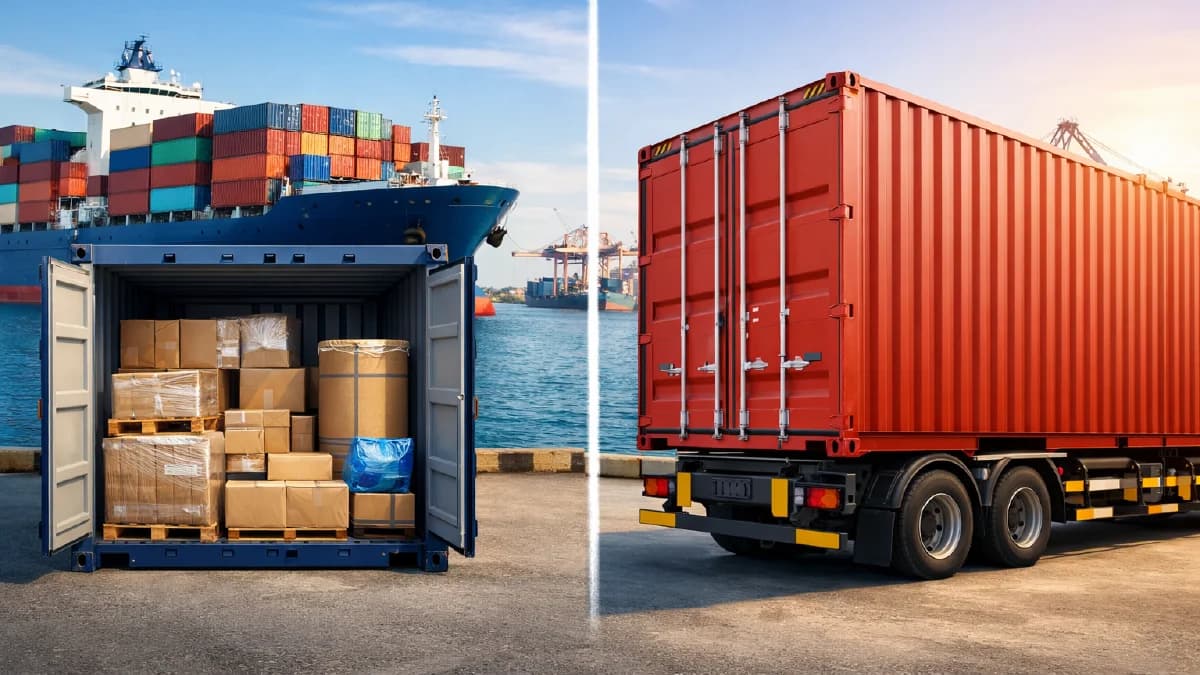
If you’re still deciding between consolidated cargo (LCL) and full container (FCL), time behavior matters.
FCL (Full Container Load)
Usually more predictable because:
- Fewer handling points
- No waiting for consolidation to fill a container
- Cleaner paperwork flow per shipment
LCL (Less than Container Load)
Often more variable because:
- Your cargo waits for consolidation at origin
- Extra handling increases delay and damage exposure
- Deconsolidation at destination can create bottlenecks
If your business depends on fixed launch dates, promotions, or seasonal inventory, FCL usually helps you keep control.
4) The “hidden delays” that break timelines
Most delays do not happen on the ocean itself—they happen around it.
A) Transshipments
Many routes to Central America involve intermediate hubs. Each hub adds:
- Transfer handling
- Schedule dependency
- Possible rollovers (your container waits for the next vessel)
B) Documentation issues
Small mistakes create big delays:
- Inconsistent invoice vs packing list
- Missing HS code logic
- Wrong consignee details
- Missing certificates (when applicable)
C) Customs and inspection variability
Even with perfect paperwork, inspections can add days.
D) Peak season + equipment imbalance
Shipping cycles change with demand. When equipment is tight, schedules become less forgiving.
5) Chinese New Year: the most underestimated calendar risk
Many importers think Chinese New Year only affects “a week”.
In reality, the operational impact can be several weeks because:
- factories slow down before the holiday,
- production stops during the holiday period,
- and ramp-up after the holiday is gradual.
Chinese New Year in 2026 is on February 17. If your inventory depends on early Q1 arrivals, you must plan earlier than usual.
6) A planning calendar that prevents stockouts
Here’s a simple framework you can adapt:
- T-12 to T-10 weeks: confirm product specs, packaging, labeling, compliance needs
- T-10 to T-8 weeks: place order + lock production schedule
- T-6 to T-5 weeks: pre-production confirmation + packaging approvals
- T-4 to T-3 weeks: final production + book freight
- T-2 weeks: inspection + document review
- T-0: cargo ready / export handling starts
- +4 to +7 weeks: arrival window (typical sea range)
- +1 to +3 weeks: customs + inland delivery (varies by country and channel)
This is why professional import programs treat shipping time as a system, not a guess.
7) Quick checklist: what to ask your forwarder or partner
Before you commit to a date, ask:
- Is this route direct or transshipment?
- What is the service frequency (weekly, bi-weekly)?
- Is this LCL or FCL—and what are the cut-off dates?
- What is included: port-to-port or door-to-door?
- What are realistic customs timelines in my destination for this cargo type?
If you can’t answer these questions, you don’t have a timeline—you have a hope.
Final takeaway
For Central America importers, the winning approach is simple:
- plan with ranges,
- reduce variability where possible (better suppliers, better documentation, better routing),
- and protect your business calendar from predictable disruptions (like Chinese New Year).
If you want, we can help you structure a repeatable import workflow—so every shipment gets easier, faster, and more predictable.

Want more predictable lead times for your next import?
Avoid risks and get better pricing with our sourcing experts.
Frequently Asked Questions
Quick answers to common questions about this topic
A practical port-to-port range is often ~25–40 days depending on origin port, transshipments, and season. Door-to-door lead time is usually longer because it includes production, export handling, customs, and inland trucking.
Usually yes. LCL adds consolidation at origin and deconsolidation at destination, plus more touchpoints. It can be efficient for small volumes, but time variability is higher.
Transshipments, vessel schedule frequency, port congestion, weather, documentation accuracy, customs inspections, and seasonality (including Chinese New Year) are the biggest drivers.