

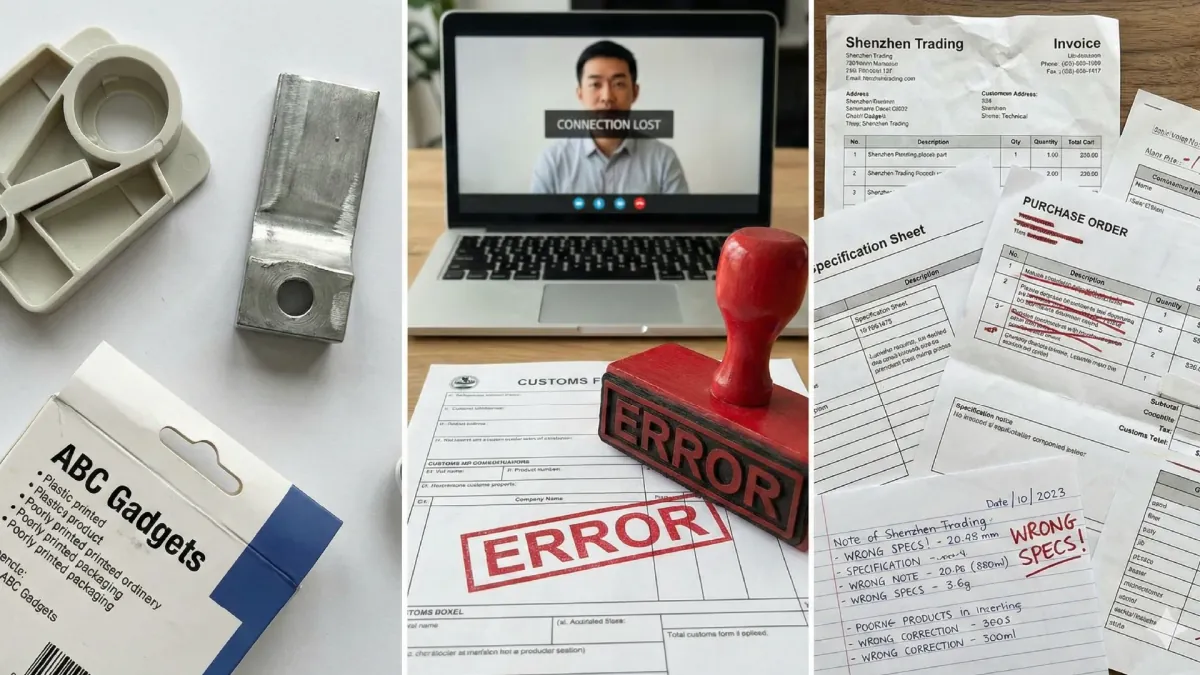
The top 10 importing mistakes are: ambiguous specs, not defining packaging, choosing only by low FOB, ignoring MOQ logic, skipping inspections, overlooking compliance, poor communication, not planning for China's holidays, misusing Incoterms, and unrealistic lead time expectations.
Importing from Asia offers enormous benefits: competitive pricing, scalability and access to a wide variety of products.
But many companies—especially first-time importers—fall into the same traps.
Most failures are not caused by “bad factories” or “shipping problems”.
They come from internal mistakes, unclear processes and unrealistic expectations.
Here are the 10 most common mistakes companies make—and how you can avoid them.
1. Assuming the Factory “Already Knows What You Want”
Ambiguity is the enemy of international sourcing.
Without clear specifications, factories make assumptions based on:
- Their own standards
- Cheaper components
- Faster processes
The result: a product that looks similar, but performs differently.
2. Not Defining Packaging Requirements
Many importers focus only on the product and forget the packaging.
This creates delays and additional costs when:
- Barcodes are missing
- Printing is incorrect
- Box dimensions don’t match palletization
Packaging is as important as the product itself.
3. Choosing the Lowest FOB Price Without Context
A very low FOB price may indicate:
- Lower-grade materials
- Weak quality control
- No capacity for rework or customization
- A trading company pretending to be a factory
Cost must always be evaluated alongside capability and consistency.
4. Ignoring MOQ Logic
Factories need minimum quantities to sustain production.
Trying to force MOQ reductions usually results in:
- Delays
- Higher unit cost
- Lower priority in production lines
MOQ is a strategic variable, not an obstacle.
5. Failing to Schedule Quality Inspections
Production issues are normal; the problem is discovering them too late.
Skipping inspections leads to:
- Defective shipments
- Missing components
- Incorrect labeling
- Rework in your country (expensive)
Inspections are non-negotiable.
6. Overlooking Compliance Requirements
Different markets require different certifications:
- CE, RoHS, FCC
- NOM (Mexico)
- RETIE (Colombia)
- SASO (Saudi Arabia)
Lack of compliance can result in:
- Port detentions
- Legal penalties
- Destroyed or returned cargo
7. Poor Communication and Long Response Times
Delays multiply when:
- Purchase orders lack detail
- Feedback arrives late
- Approvals are forgotten
- Meetings are skipped
Clear, written communication prevents 80% of issues.
8. Not Planning for China’s Seasonal Disruptions
Chinese New Year, Golden Week, and local holidays disrupt:
- Production
- Trucking
- Port operations
- Container availability
Planning around these dates is essential.
9. Misusing Incoterms
Incorrect Incoterms often create unexpected costs.
For example:
- FOB without confirming port fees
- CIF without understanding destination charges
- EXW without evaluating inland transport risk
Choose the term based on control, not convenience.
10. Unrealistic Lead Time Expectations
Factories are not Amazon warehouses.
Production requires time, planning and material coordination.
Companies that fail to forecast properly end up with:
- Stockouts
- Air freight (expensive)
- Lost sales
Planning beats urgency every time.
Need help improving your sourcing process?
Avoid risks and get better pricing with our sourcing experts.
Frequently Asked Questions
Quick answers to common questions about this topic
Top mistakes include: ambiguous specs, not defining packaging, choosing only by low FOB, ignoring MOQ logic, skipping inspections, overlooking compliance, poor communication, not planning for China's holidays, misusing Incoterms, and unrealistic lead times.
A very low FOB price may indicate lower-grade materials, weak quality control, no capacity for rework, or a trading company pretending to be a factory. Cost must be evaluated alongside capability and consistency.
Skipping inspections leads to defective shipments, missing components, incorrect labeling, and expensive rework in your country. Inspections are one of the most cost-effective risk prevention tools.